

D01–D0701 / 04
Find the problem.
Pick one worth solving and talk to the people who have it.
A 30-day fellowship for engineering students. Find a real problem, build the fix with AI, and launch it to real users. One-to-one with a mentor, alongside your DSA prep. About 3–5 hours a week.
Start with your free readiness score
Which year are you in?
2 minutes, all taps, free. You get a score out of 100, where you stand in 7 areas, and your top 3 gaps.
Or see what Cohort 01 built ↓In Cohort 01, 7 student teams put a product live. One of them, Tuition OS, is now used by a tuition centre with about 100 students. It went live 29 days after the team started.
In final year? You can still join. 3–5 hours a week fits around placement drives.
[ What is Build Theory ]
You find a problem people actually have, build the fix with AI, and get real people using it, with a mentor working with you one-to-one the whole way. It runs alongside your DSA prep, not instead of it.
Find where you are today. Everyone in Cohort 01 started somewhere on this ladder.

01 · Curious
You use ChatGPT every day, but you've never built anything with it.
02 · Maker
You've put together an app or page with Lovable, Replit or Bolt, but nobody outside your friends has used it.
03 · Systems thinker
You've connected tools with n8n, Zapier or an AI agent, and something now runs without you.
04 · Shipper
You build with AI and put things out. Now you want real users and real results.
05 · Level 5
You take an idea to a live product that real people use, on your own. This is what you can say in your next interview.

01 · Curious
You use ChatGPT every day, but you've never built anything with it.
02 · Maker
You've put together an app or page with Lovable, Replit or Bolt, but nobody outside your friends has used it.
03 · Systems thinker
You've connected tools with n8n, Zapier or an AI agent, and something now runs without you.
04 · Shipper
You build with AI and put things out. Now you want real users and real results.
05 · AI-native builder
You take an idea to a live product that real people use, on your own. This is what you can say in your next interview.
Level 5 is what interviews now check: not 'can you code?' but 'what did you build, who used it, and what went wrong?'
See what Cohort 01 built ↓All 14 teams and what each one is building.
Read every team’s story →
Cohort BT-01 / Fellow codes BTF-001 to BTF-024
Tap the ones that are you.
No one sees this but you.
0of 6. You're not behind. You're exactly who Cohort 01 was on Day 0.of 6. You're exactly who this was built for.
Same degree. Same CGPA. Same mini-project. So why would they pick you?
This isn't about being lazy or not smart enough. College teaches you subjects. It never asks you to find a real problem, build something for it, and get real people to use it.
That missing part is exactly what Build Theory's 30 days are for.
Why it matters more now than it did for your seniors ↓Your seniors got placed because they could code. Now anyone can ask AI for a working login page in 30 seconds. Including everyone in your placement group.
of Indian IT firms report fewer entry-level hires since adopting AI. Only 14% report fewer senior hires.
ICRIER survey of 651 IT-sector respondents, 2026Net hires by Indian IT companies in a year: about 6 lakh in FY22, 1.4 lakh in FY26.
Xpheno data, cited in Nomura’s 2026 reportof HR leaders say problem-solving is the skill they want most. 39% say AI/ML.
Unstop Talent Report 2026, 500+ HR leadersCoding still gets you through the test. It no longer sets you apart. Here's what does now.
Coding rounds haven't gone away. That's why Build Theory runs alongside your DSA prep, not instead of it.
See where you stand today →Anyone can prompt an app into existence now. What gets you hired is everything around it. And no, you don't have to start a company to learn it.
Vibe coding gets you an app. Build Theory gets you real experience you can talk about in any interview.
Here's how that compares with what you're probably doing now:
[ The interviewer, thinking ]
More than half of employers want graduates to show their skills with real examples, not just list them. NACE Job Outlook 2026 ↗
Most candidates list skills. She's showing me a problem she solved, with real users.
[ Same question. Two candidates. ]
How would your answer sound today? Find out in 2 minutes, free.
Get my readiness scoreYou go through everything a founder does, from problem to launch. Not to become a founder, but so you've already done the work your first job will ask for. A mentor works with you one-to-one the whole way.
Identify → Understand users → Validate → Decide → Build with AI → Work as a team → Market → Get feedback → Adapt → Present → Launch
D01–D0701 / 04
Pick one worth solving and talk to the people who have it.
D08–D1502 / 04
Decide what matters, cut what doesn't, build it with AI.
D16–D2303 / 04
Watch people use it, take the hard feedback, change course.
D24–D3004 / 04
Get it in front of people, price it, present it.
Any year, any branch. You don't need to be from CSE or IT to join.
[ Your mentors ]
One-to-one with people who build and back products for a living. Not lecturers.

[ AI MENTOR ]
AI engineer building conversational AI at scale.


[ DESIGN MENTOR ]
Product designer with startup experience across AI, product and marketing.
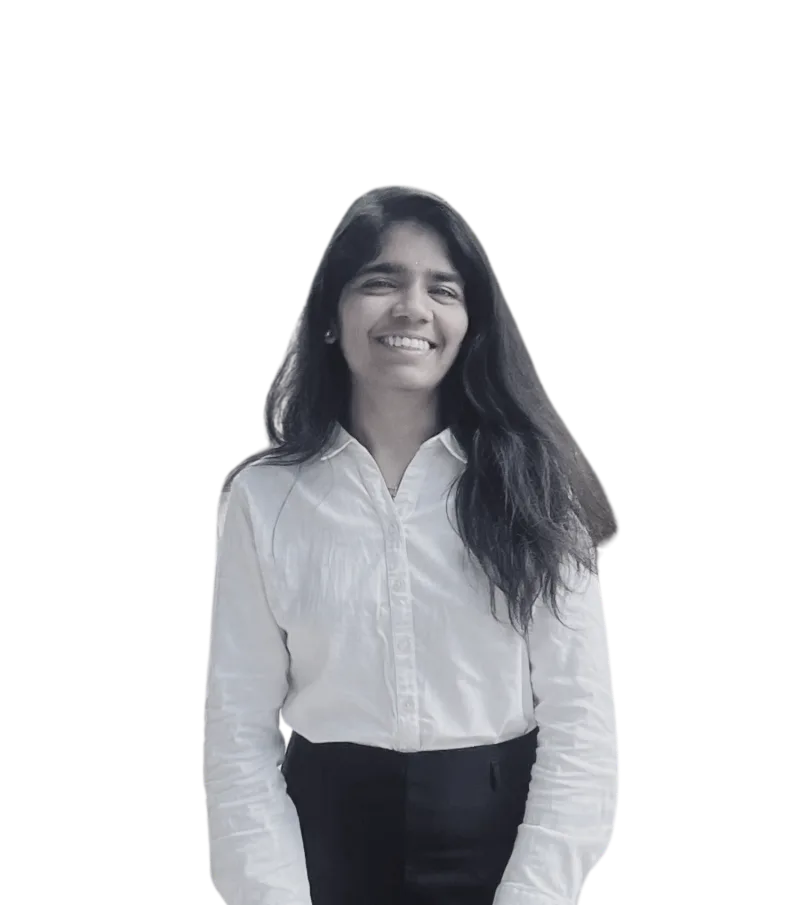
[ DEVELOPMENT MENTOR ]
Product engineer. Director at Poditivity, ships to production.


[ PRODUCT MENTOR ]
Investor evaluating startups across venture capital and private equity.



[ COMMUNICATION MENTOR ]
Product leader building AI and digital wellbeing products.

[ ENTREPRENEURSHIP MENTOR ]
Founder with an enterprise tech and ISB background in strategy and analytics.


Our strongest fellows join Build Theory Enterprise client projects as paid, forward-deployed interns. You sit with the client, decide what to build, ship it, and leave with a company that can vouch for you.
3 Cohort 01 fellows are building the lead-tracking system for Founders First Network (FFN)'s sales team.
Not guaranteed. It depends on what you ship and which client projects are open. It isn't part of the fee.
[ Free · 2 minutes ]
You've seen what the job asks for and what Cohort 01 built. Now check your own gap: how ready you are for placements, and what to fix first.
[ What you get ]
Tap through 11 questions: your year, branch, target role, and what you can do today. No essays, no right answers.
Your score shows on screen right away, split into 7 areas. The full report and a personal fellowship page land in your email instantly, and on WhatsApp.
Get free career and building direction from Prashanth. 20 minutes, one-to-one: what to build first for the role you want, and whether Build Theory is the right next step for you.
Free. Any branch, any year.
We send your report and a few follow-ups on WhatsApp and email. Reply STOP and they stop.
239 engineering students have checked their score

I studied electronics in a smaller city and barely wrote code. In college I watched smart people miss out on placements. Not because they weren't capable, but because nobody showed them how to get from what college teaches to what jobs actually ask for.
I built Poditivity from scratch, with no funding and no guarantees. Everything I know about problems, users and selling, I learned by doing it. Build Theory gives you that same experience in 30 days, with a mentor next to you.
Thakur Prashanth / Founder and CEO, Poditivity
We wanted to know if our current idea would help the user or not. I thought blind people would lack confidence. They all were awesome. They were more confident than us. I was inspired by them.
 G. Divyasree
Through our conversations, we understood their problems from their own perspective rather than just assuming what they might be experiencing. When we discussed our idea with them, they told us it could help address one of their biggest challenges. Hearing this directly from the people we are building for made us realise this is not just a project or an idea. It could make a real difference in someone’s life.
 K. Rishitha Purna
Before Build Theory, I didn’t know how to turn an idea into something real. I learned how to start with the problem, understand what’s needed, create the PRD and MVP, and then actually build it using AI. The biggest takeaway for me was getting a clear idea of the steps to create something and the confidence to do it again on my own.
 Ch Sreemayee
Before Build Theory, we didn’t know how tools like GitHub, Supabase, Netlify and Claude could help us turn an idea into a real product. We learned the process from refining an idea and creating a PRD to building an MVP and seeing it actually work. For the first time, I felt confident building something on my own.
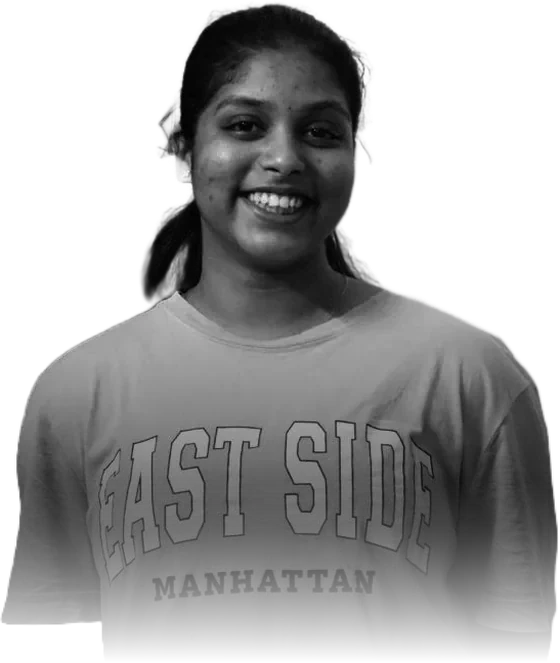 Sanjana Labishetty
We had done projects before, but this was the first time we understood the process we can actually follow.

 Srikar and Paarthu
What Build Theory is doing for non-technical people is really, really good. I’ve learned so much in just two weeks, starting out as a complete beginner with zero background in any of this. Everything felt brand new, but it’s been made so easy to understand, and that’s given me real confidence, thanks to Build Theory.
 Shruti Sharma
You are providing more than you are promising.
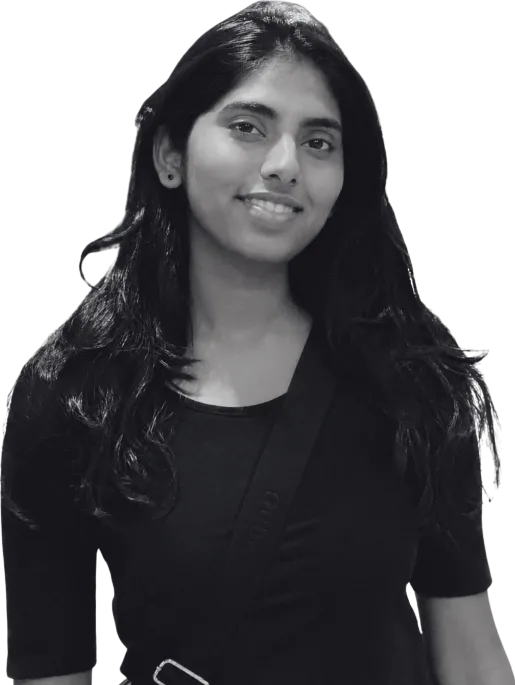 Madhupriya Allam
I, even growing up, did not really see this many problems in my own parents’ tuition institute until I started to see them as clients and did customer interviews.
Ch SreemayeeI never thought in just this much time I would learn so much about product building, what stays behind in the total process, and I am enjoying the whole process a lot.
Sanjana LabishettyWe learned that we should not directly jump into building. First we need clarity on the idea, the problem, the users, and what exactly we are going to build.
Srikar and PaarthuWhen I started diving deeper into my idea, I uncovered problems I didn’t even know existed. Every session gave me more clarity, and I began finding practical ways to solve them. I genuinely don’t think I would’ve reached this level of understanding if I hadn’t been a part of Build Theory.
Ch SreemayeeToday, you don’t need to be a developer to build something meaningful. If you’ve got an idea but don’t know where to start, Build Theory is honestly the place to be.
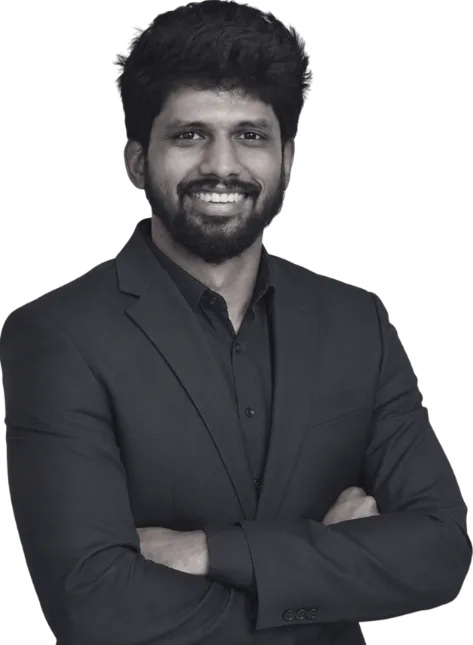 Dhananjaya Nair
I have been using AI for so much stuff, and if the world is changing I would want Sreemayee to really be adaptive and have an upper hand than others. I am seeing how Build Theory is making that possible.
8 of 14 Cohort 01 teams built in pairs. Bring a friend and the cost splits.
What the price includes
9 things. One price.
The most innovative curriculum for any student
Three phases that take you from noticing a problem to a live product, then onto a stage. Built for every branch and every year.
Complete handholding, 1:1 classes and personal support
A mentor who knows your product, in 1:1 sessions for most classes. You are never stuck on your own.
AI assistant that solves your doubts 24/7
Stuck at 2 am on a bug or a PRD question? Ask, and get an answer in seconds.
Build Theory Fellowship app
Every course and every session recording in one app. Rewatch any class, any time.
Interview sessions: how to talk about what you built
Turn your product into a 2-minute story recruiters remember, then practise it in mock interviews with feedback.
Demo Day, in front of innovators, investors and leaders
We help you build your deck and rehearse it, then you present your product on stage.
Support beyond the productIf your product shows commercial potential, we keep working with you after the 30 days: go-to-market, pricing, finding your first customers and working out how it makes money.
The 30 days are not the finish line if your product has a market.
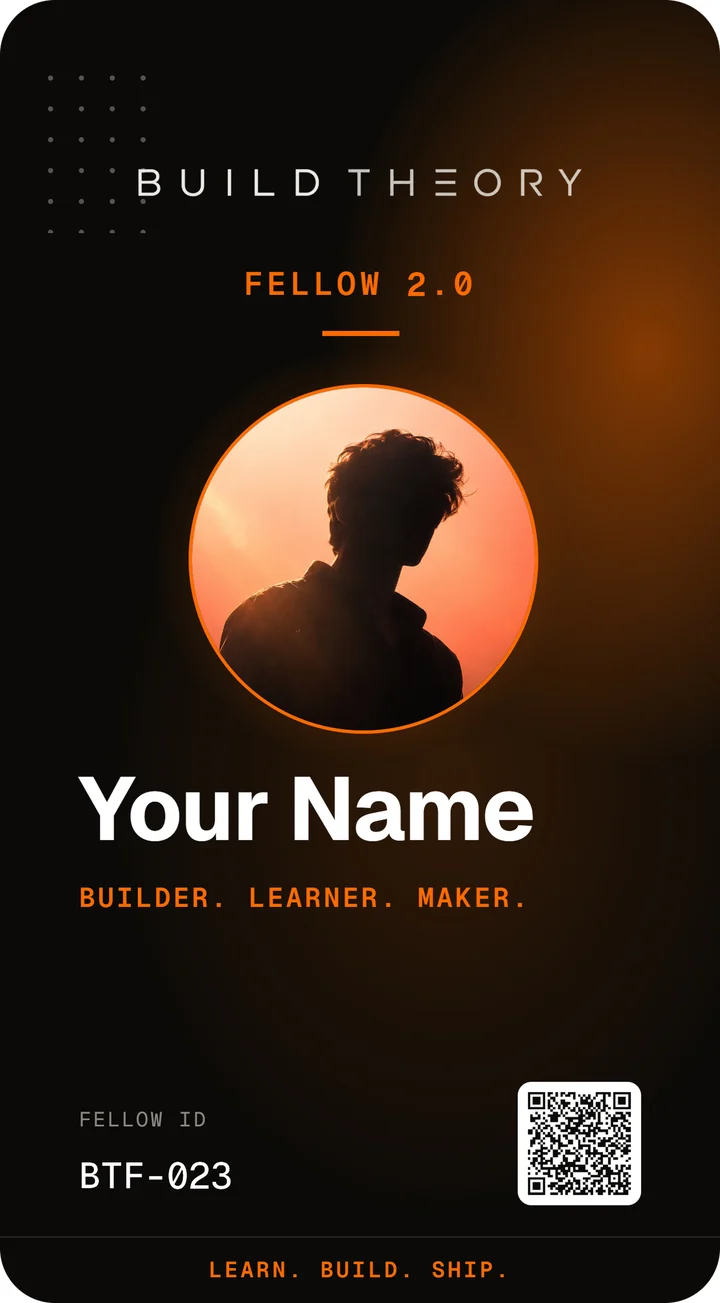
Permanent Build Theory ID card
Your fellow number is yours for good. Proof you built something real.
Lifetime community access
Every cohort, every fellow, every mentor. The network keeps growing after you ship.
All 9 for ₹14,999 per team. Come with a friend and it works out to about ₹250 a day each for the 30 days.
₹20,000
₹14,999per team
About ₹7,500 each with a friend
[ Cohort 02 / Limited seats ]
Apply for Cohort 02No payment to apply. About 5 minutes. Prashanth calls you within 24 hours to talk about your idea and see if it's a fit.
Not sure yet? Start with the free readiness score.
Free readiness score. 2 minutes, all taps. Plus free career direction from Prashanth if you want it.
Get my readiness score